

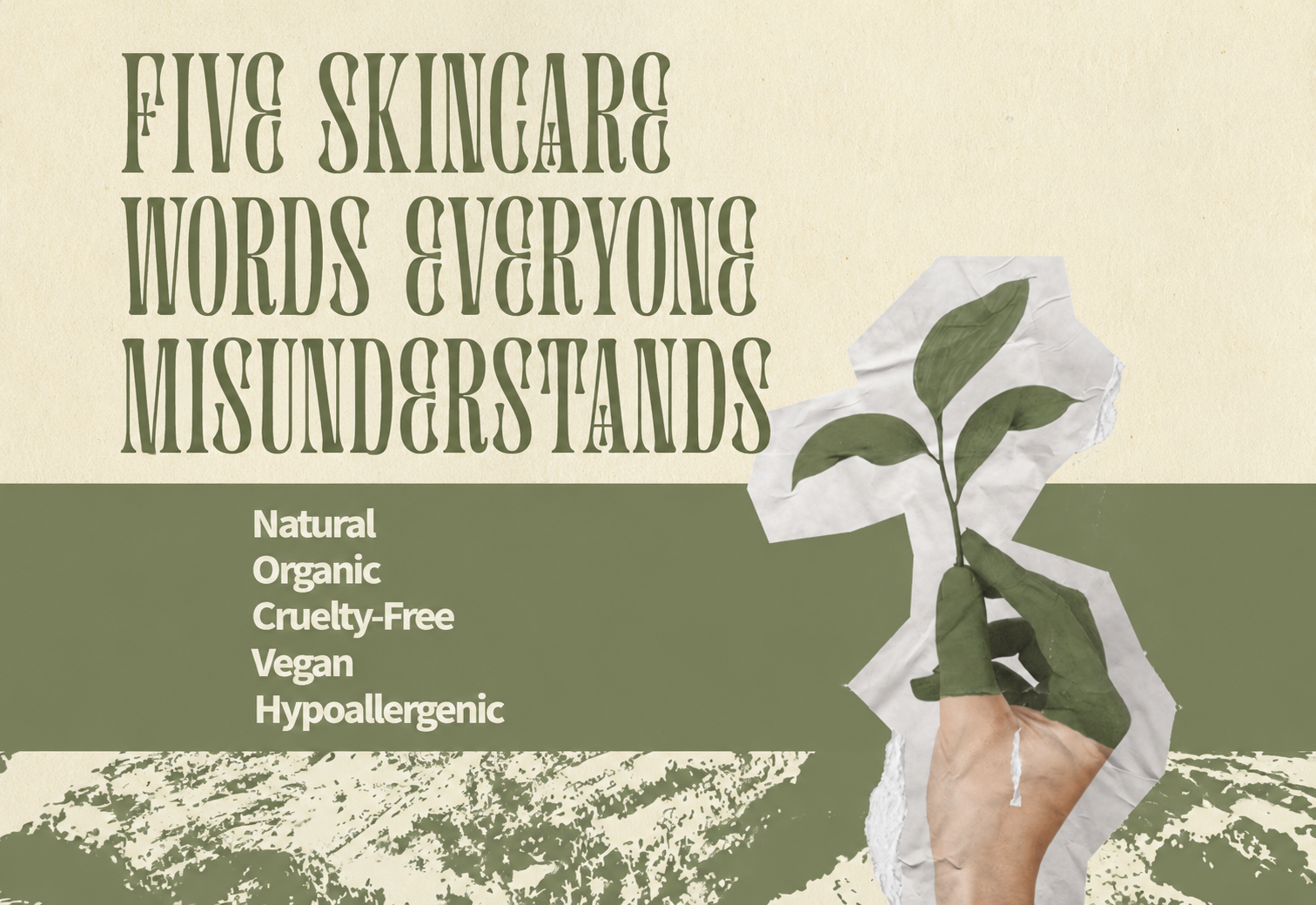
Walk through the skincare aisle or browse online, and you’ll quickly notice labels like natural, organic, cruelty-free, vegan, and hypoallergenic. While these terms may influence purchasing decisions, they don’t always mean what consumers think they do.
Understanding these labels can help you make more informed choices—and avoid relying on marketing alone.
Natural
One of the most misunderstood terms in skincare is “natural.” In many countries, there is no universal legal definition for this claim in cosmetics.
A product labeled “natural” may contain ingredients derived from plants or minerals, but this does not guarantee that it is safer, more effective, or less likely to cause irritation. In fact, many natural ingredients, including essential oils and botanical extracts, can trigger allergic reactions or skin sensitivity.
Organic
“Organic” refers to how certain agricultural ingredients are grown and processed. Certified organic products follow specific farming and production standards.
However, organic certification does not indicate that a product will perform better on your skin or treat conditions such as acne, eczema, rosacea, or signs of aging more effectively.
Cruelty-Free
Animal testing for cosmetics is becoming less common, and many brands are now cruelty-free. However, this label reflects an ethical commitment—not a product’s quality, effectiveness, or suitability for your skin.
A cruelty-free moisturizer, for example, may still contain fragrances or ingredients that are not ideal for sensitive skin.
Vegan
A vegan skincare product contains no animal-derived ingredients.
This label does not tell you whether a product is natural, organic, fragrance-free, or appropriate for your skin type. Vegan products may still contain synthetic ingredients, preservatives, and fragrances.
Hypoallergenic
Many consumers assume that “hypoallergenic” means a product cannot cause an allergic reaction. In reality, the term generally indicates that a manufacturer formulated the product to reduce the likelihood of allergy.
There is no universal standard for this claim, and even hypoallergenic products can cause reactions in some individuals.
Look Beyond the Front Label
Instead of choosing a product based solely on marketing claims, consider these questions:
- Is it appropriate for my skin type?
- Does it contain ingredients supported by scientific evidence?
- Does it avoid ingredients I know my skin cannot tolerate?
- Is the claim backed by an independent certification?
For consumers who value certifications, organizations such as Leaping Bunny®, USDA Organic®, COSMOS Organic®, and Certified Vegan® provide recognized standards for specific claims. These certifications can offer additional confidence, but they should not replace individualized skincare recommendations.
The Bottom Line
There is no single label that makes a skincare product “the best.”
The right product depends on your skin type, your skin concerns, and ingredients supported by scientific evidence. Marketing claims can be helpful, but they should never be the only reason you choose a product.
If you’re unsure which products are right for you, consult a board-certified dermatologist. A personalized skincare plan will always provide more value than relying on the words printed on the front of a bottle.